

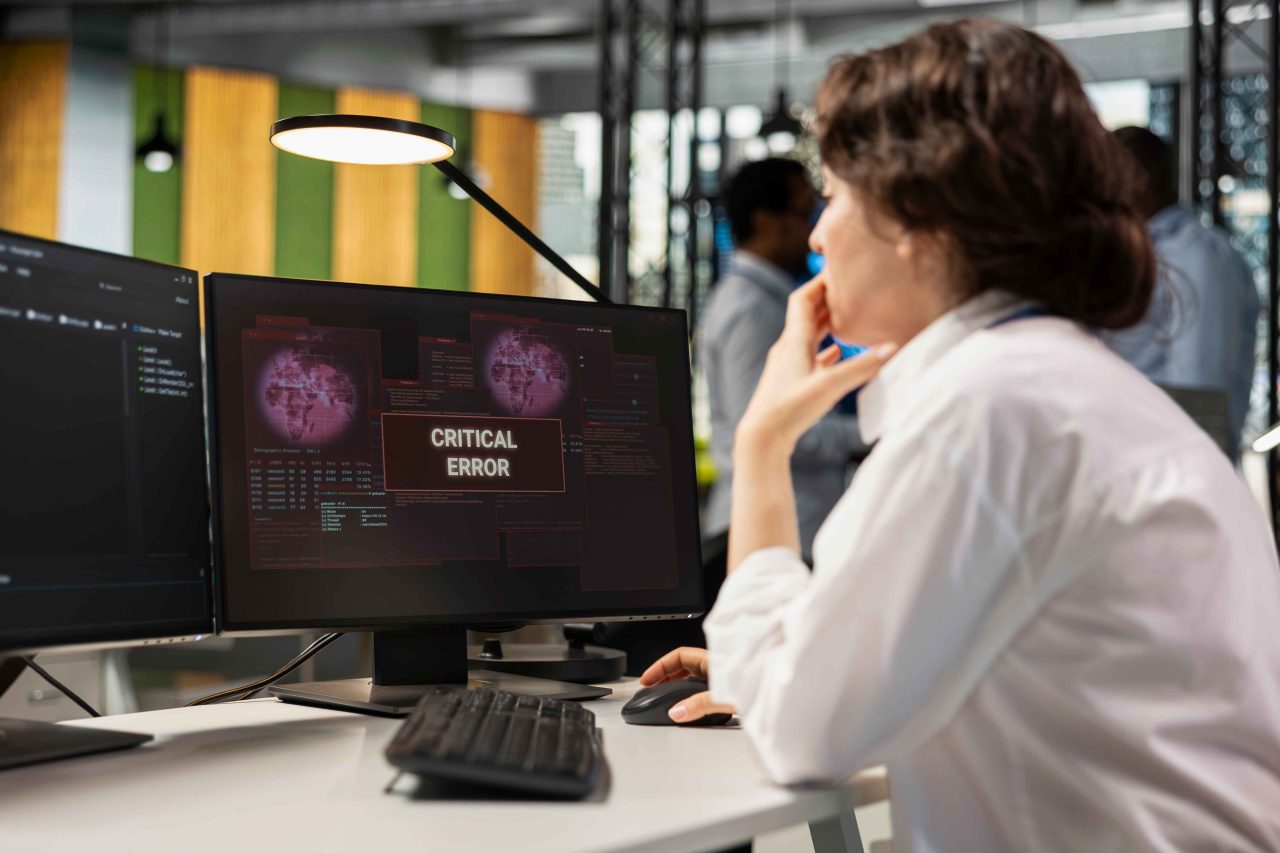
Healthcare organizations operate in an environment where system availability, data accessibility, and network reliability are critical to daily operations. Hospitals, clinics, diagnostic centers, and healthcare providers rely on IT infrastructure for electronic health records, clinical applications, medical devices, patient communication, billing, and administrative workflows.
When these systems become unavailable, even for a short period, the consequences can extend beyond IT operations. Delays in accessing patient information, disrupted clinical workflows, and communication failures can affect staff productivity and the overall patient experience.
This is where proactive IT monitoring plays a critical role.
Why IT Downtime Is a Critical Challenge in Healthcare
Healthcare IT environments are becoming increasingly complex. Organizations often operate a combination of:
- Electronic Health Record (EHR) and Electronic Medical Record (EMR) systems
- Hospital Information Systems (HIS)
- Laboratory Information Systems (LIS)
- Radiology Information Systems (RIS)
- PACS and medical imaging platforms
- Cloud-based healthcare applications
- Virtualized servers and data centers
- Connected medical and IoT devices
- Wireless and wired networks
- Patient-facing digital platforms
A failure in any of these components can affect dependent systems and users.
For example, a network performance issue may prevent clinical staff from accessing applications, while insufficient server resources could cause an important application to become slow or unavailable.
The challenge is not simply recovering from downtime. It is identifying the warning signs before downtime occurs.
What Is Proactive IT Monitoring?
Proactive IT monitoring is the continuous observation of IT infrastructure and applications to identify performance degradation, failures, capacity issues, and potential security threats before they become major incidents.
Modern monitoring solutions can collect telemetry from different layers of the IT environment, including:
Infrastructure → Network → Servers → Applications → Endpoints → Cloud → Security
IT teams can use this information to identify anomalies, generate alerts, investigate root causes, and take preventive action.
Instead of waiting for employees to report that a system is unavailable, IT teams can receive alerts when performance begins to deteriorate.
Key Areas That Healthcare Organizations Should Monitor
1. Network Performance
Reliable connectivity is fundamental to healthcare IT.
Network monitoring can track:
- Bandwidth utilization
- Latency
- Packet loss
- Network availability
- Interface errors
- Device health
- Connectivity between locations
Early identification of network degradation can help IT teams address issues before they affect critical applications.
2. Server and Infrastructure Health
Servers supporting healthcare applications require continuous monitoring.
Important metrics include:
- CPU utilization
- Memory consumption
- Storage capacity
- Disk performance
- Server availability
- Hardware health
- Virtual machine performance
For example, consistently increasing storage utilization can be identified before insufficient disk space causes an application or service failure.
3. Application Availability and Performance
Infrastructure can be operational while an application is still experiencing problems.
Application Performance Monitoring (APM) can provide visibility into:
- Application availability
- Response times
- Error rates
- Transaction performance
- Service dependencies
- Application resource consumption
This helps IT teams move beyond simply asking whether an application is “up” and understand how well it is performing.
4. Cloud Infrastructure
Healthcare organizations increasingly use cloud platforms for applications, storage, backup, collaboration, and other workloads.
Cloud monitoring can provide visibility into:
- Resource utilization
- Service availability
- Application performance
- Network connectivity
- Capacity
- Configuration changes
- Cloud resource health
Continuous visibility helps organizations identify performance and availability issues across hybrid and cloud environments.
5. End-User Devices
A hospital’s IT environment extends beyond servers and networks.
Workstations, laptops, mobile devices, clinical endpoints, and other connected systems can also affect productivity.
Endpoint monitoring can help identify:
- Device performance issues
- Operating system problems
- Software failures
- Resource constraints
- Connectivity issues
- Patch and configuration concerns
This enables IT teams to address recurring endpoint problems before they become widespread disruptions.
From Reactive IT Support to Proactive IT Operations
A traditional reactive IT model typically follows this cycle:
Issue occurs → User reports issue → IT investigates → IT resolves issue
While this model is necessary for handling incidents, it provides limited opportunity for prevention.
A proactive model changes the approach:
Monitor → Detect → Analyze → Predict → Prevent → Resolve
With continuous monitoring, IT teams can identify trends and abnormal behavior before they result in a major outage.
This can help reduce Mean Time to Detect (MTTD) and Mean Time to Resolve (MTTR) while improving overall service availability.
The Importance of Automated Alerts
Monitoring becomes significantly more effective when it is combined with intelligent alerting.
Instead of manually checking hundreds of systems, IT teams can configure alerts based on defined thresholds and abnormal patterns.
Examples include:
- Server CPU consistently exceeding defined thresholds
- Storage approaching capacity limits
- Network latency increasing unexpectedly
- Application response times deteriorating
- Critical services becoming unavailable
- Repeated authentication failures
- Endpoint health issues
However, effective monitoring is not about generating as many alerts as possible. Alert quality matters.
Poorly configured monitoring can create alert fatigue, making it difficult for IT teams to identify genuinely critical incidents.
Healthcare organizations should therefore establish appropriate thresholds, escalation policies, prioritization, and incident workflows.
Proactive Monitoring and Cybersecurity
Availability and cybersecurity are increasingly interconnected.
A cyber incident can result in system unavailability, data access problems, or operational disruption. Monitoring unusual activity can therefore form an important component of an organization’s broader security strategy.
Security monitoring can help identify indicators such as:
- Unusual login patterns
- Abnormal network traffic
- Unexpected configuration changes
- Suspicious endpoint activity
- Repeated authentication failures
Proactive monitoring should complement, not replace, dedicated cybersecurity controls such as endpoint protection, identity security, vulnerability management, backup, and incident response.
Monitoring Healthcare IT 24/7
Healthcare operations don’t follow a conventional 9-to-5 schedule.
Emergency departments, critical care units, laboratories, pharmacies, and other healthcare services may operate continuously. IT infrastructure therefore needs to be monitored continuously as well.
24/7 monitoring provides ongoing visibility and allows IT teams or managed service providers to identify and respond to issues outside normal business hours.
This is particularly important for organizations with limited internal IT resources or geographically distributed infrastructure.
Using Monitoring Data for Predictive IT Management
One of the biggest advantages of continuous monitoring is the ability to identify trends over time.
For example, monitoring data might reveal that:
- Storage capacity is consistently approaching its limit
- A server experiences recurring performance spikes
- Network traffic increases during specific periods
- An application gradually becomes slower
- A particular endpoint repeatedly experiences failures
These insights allow IT teams to plan maintenance, capacity upgrades, configuration changes, or infrastructure improvements before a critical incident occurs.
This moves IT management from incident response toward predictive and preventive operations.
How Proactive IT Monitoring Supports Healthcare Organizations
A well-designed monitoring strategy can help healthcare organizations:
Reduce Downtime
Identify infrastructure and application problems earlier and address them before they result in extended outages.
Improve IT Response
Automated alerts provide IT teams with faster visibility into incidents.
Improve System Availability
Continuous monitoring helps maintain the health and performance of critical IT services.
Optimize Infrastructure
Performance and capacity data can support better infrastructure planning and resource allocation.
Support Security Operations
Monitoring can help identify abnormal activity that may require further security investigation.
Improve User Experience
Reliable applications, networks, and endpoints help healthcare professionals work more efficiently.
Implementing an Effective IT Monitoring Strategy
Technology alone is not enough. Healthcare organizations need a structured monitoring strategy.
A strong approach should include:
1. Identify critical systems
Prioritize applications and infrastructure that directly support healthcare operations.
Prioritize applications and infrastructure that directly support healthcare operations.
2. Define performance baselines
Understand what normal system behavior looks like.
Understand what normal system behavior looks like.
3. Configure meaningful alerts
Set thresholds based on business and technical requirements.
Set thresholds based on business and technical requirements.
4. Establish escalation procedures
Define who should respond when a critical alert is triggered.
Define who should respond when a critical alert is triggered.
5. Track MTTD and MTTR
Measure how quickly issues are detected and resolved.
Measure how quickly issues are detected and resolved.
6. Review monitoring data regularly
Use trends and historical data to identify recurring problems and capacity requirements.
Use trends and historical data to identify recurring problems and capacity requirements.
7. Integrate monitoring with IT operations
Connect monitoring with incident management, maintenance, and service management processes.
Connect monitoring with incident management, maintenance, and service management processes.
The Role of Managed IT Services
Maintaining 24/7 monitoring internally can require specialized expertise, monitoring platforms, processes, and around-the-clock resources.
Managed IT services can provide healthcare organizations with access to dedicated monitoring and support capabilities without requiring them to build every component internally.
A managed service provider can help with infrastructure monitoring, network management, cloud environments, endpoint support, incident response, and ongoing IT operations.
For healthcare organizations, this can provide an additional layer of operational resilience while allowing internal teams to focus on strategic priorities.
EIL Global: Supporting Reliable Healthcare IT
At EIL Global, we help organizations manage increasingly complex IT environments through managed IT services, cloud solutions, end-user computing, infrastructure support, and proactive IT operations.
For healthcare organizations, a proactive approach to IT management can help improve visibility, reduce avoidable disruptions, and maintain the availability of technology that employees depend on every day.
The objective is simple:
Detect issues earlier. Respond faster. Prevent recurring problems. Keep critical IT services available.
Healthcare organizations cannot eliminate every IT incident, but they can improve their ability to predict, detect, prevent, and respond to technology problems.
Proactive IT monitoring provides the visibility needed to identify performance degradation, infrastructure risks, application issues, and unusual activity before they escalate into major disruptions.
In an industry where technology supports critical operations around the clock, proactive IT monitoring isn’t just an IT best practice—it is an important component of operational resilience.