

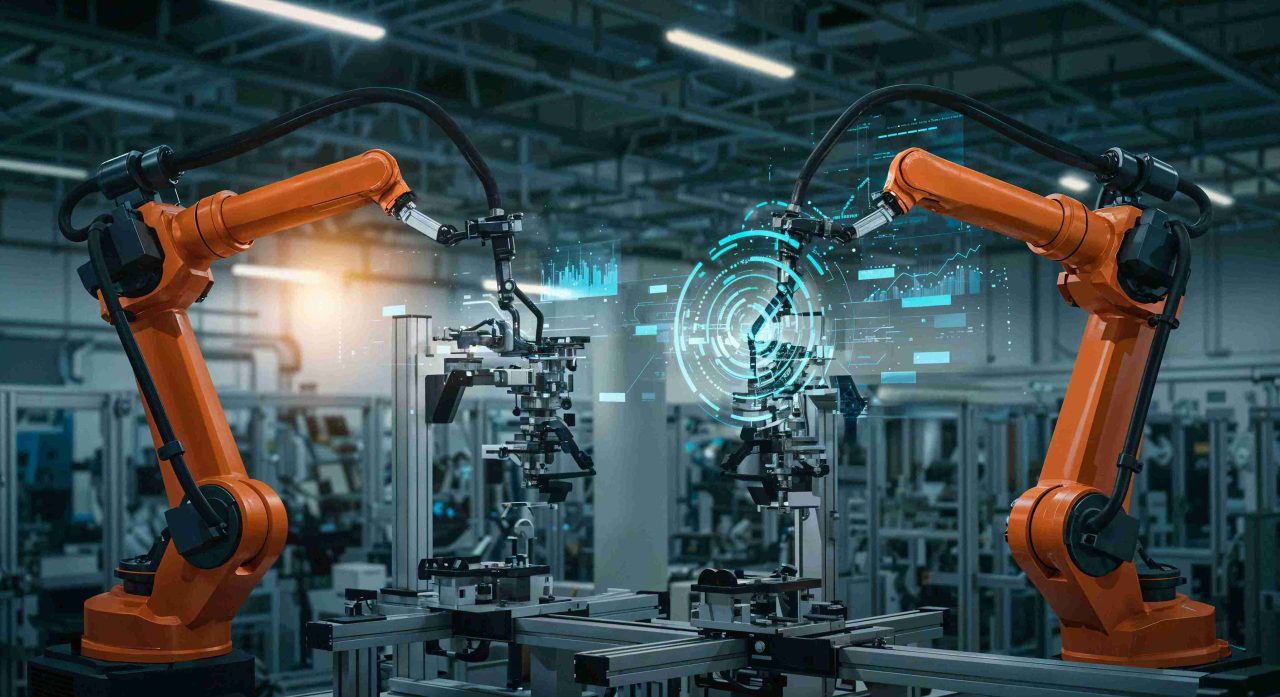
In today’s competitive industrial landscape, manufacturing companies are under constant pressure to increase productivity, reduce operational costs, maintain quality standards, and meet growing customer demands. To achieve these goals, many organizations are embracing Artificial Intelligence (AI) and automation technologies as key drivers of operational efficiency and innovation.
AI and automation are transforming manufacturing processes by enabling smarter decision-making, improving productivity, and creating more agile production environments. From predictive maintenance to intelligent quality control, these technologies are helping manufacturers achieve higher efficiency while reducing waste and downtime.
The Growing Role of AI and Automation in Manufacturing
Manufacturing has always been a sector driven by technological advancement. However, the integration of AI-powered systems and advanced automation is taking efficiency to a new level. Modern manufacturing facilities are increasingly using data-driven insights, machine learning algorithms, and automated systems to optimize every stage of production.
These technologies allow manufacturers to analyze vast amounts of operational data, identify inefficiencies, predict potential issues, and automate repetitive tasks with greater accuracy than traditional methods.
Key Ways AI and Automation Improve Manufacturing Efficiency
1. Predictive Maintenance
Equipment failures can lead to costly downtime and production delays. AI-powered predictive maintenance systems analyze machine data in real time to identify signs of wear, potential failures, and performance issues before they become critical problems.
Benefits include:
- Reduced unplanned downtime
- Lower maintenance costs
- Extended equipment lifespan
- Improved production continuity
By addressing issues proactively, manufacturers can avoid costly disruptions and maximize asset utilization.
2. Automated Quality Control
Maintaining consistent product quality is crucial in manufacturing. AI-powered computer vision systems can inspect products at high speed and with exceptional accuracy.
These systems can:
- Detect defects and inconsistencies
- Identify production errors in real time
- Ensure compliance with quality standards
- Reduce human inspection errors
Automated quality control not only improves product quality but also minimizes waste and rework costs.
3. Smart Production Planning
AI algorithms can analyze production schedules, inventory levels, customer demand, and supply chain data to optimize manufacturing operations.
With intelligent production planning, companies can:
- Improve resource allocation
- Reduce production bottlenecks
- Optimize workforce utilization
- Meet delivery deadlines more effectively
This results in greater operational efficiency and improved customer satisfaction.
4. Robotics and Process Automation
Industrial robots have become a critical component of modern manufacturing facilities. These automated systems can handle repetitive, labor-intensive, and precision-based tasks with consistent performance.
Common applications include:
- Assembly line operations
- Material handling
- Packaging and labeling
- Welding and fabrication
- Inventory management
Automation reduces manual effort while increasing speed, accuracy, and productivity.
5. Supply Chain Optimization
Manufacturers rely on efficient supply chains to maintain smooth operations. AI can analyze supplier performance, demand forecasts, logistics data, and inventory trends to improve supply chain decision-making.
Benefits include:
- Better inventory management
- Reduced stock shortages
- Improved demand forecasting
- Lower transportation costs
- Faster response to market changes
AI-driven supply chain optimization helps manufacturers remain agile in a rapidly changing business environment.
6. Energy Efficiency and Sustainability
Energy costs represent a significant portion of manufacturing expenses. AI systems can monitor energy consumption patterns and identify opportunities to reduce waste.
Manufacturers can use AI to:
- Optimize equipment usage
- Reduce unnecessary energy consumption
- Monitor environmental impact
- Support sustainability initiatives
Improved energy efficiency not only reduces operational costs but also contributes to corporate sustainability goals.
Benefits of AI and Automation in Manufacturing
Organizations that successfully implement AI and automation often experience significant improvements across multiple areas:
Increased Productivity
Automated systems work continuously with minimal interruptions, helping manufacturers increase output without proportionally increasing labor costs.
Improved Accuracy
AI-powered systems reduce human error and ensure consistent quality across production processes.
Cost Reduction
Automation minimizes waste, reduces downtime, and optimizes resource utilization, leading to lower operating costs.
Enhanced Safety
Automated machinery can perform hazardous tasks, reducing workplace risks and improving employee safety.
Faster Decision-Making
Real-time data analytics provide actionable insights that help managers make informed decisions quickly.
Greater Competitiveness
Manufacturers that adopt AI and automation can respond more effectively to market demands and gain a competitive advantage.
Challenges to Consider
While the benefits are substantial, manufacturers should also be prepared for challenges such as:
- Initial investment costs
- Integration with legacy systems
- Workforce training requirements
- Data security concerns
- Change management and adoption
A well-planned implementation strategy can help organizations overcome these challenges and maximize their return on investment.
The Future of Smart Manufacturing
The future of manufacturing lies in connected, intelligent, and highly automated production environments. Emerging technologies such as Industrial Internet of Things (IIoT), digital twins, advanced robotics, and generative AI are expected to further enhance manufacturing efficiency.
As AI capabilities continue to evolve, manufacturers will gain even greater visibility into operations, enabling predictive decision-making, autonomous production systems, and continuous process optimization.
AI and automation are no longer optional technologies for modern manufacturers—they are essential tools for achieving operational excellence. By leveraging intelligent systems for predictive maintenance, quality control, production planning, supply chain management, and process automation, manufacturing companies can significantly improve efficiency, reduce costs, and remain competitive in an increasingly digital world.
Organizations that invest in AI-driven manufacturing today will be better positioned to meet future challenges, adapt to market changes, and drive sustainable growth in the years ahead.